×

The Standard e-Paper
Join Thousands of Readers





Audio By Vocalize
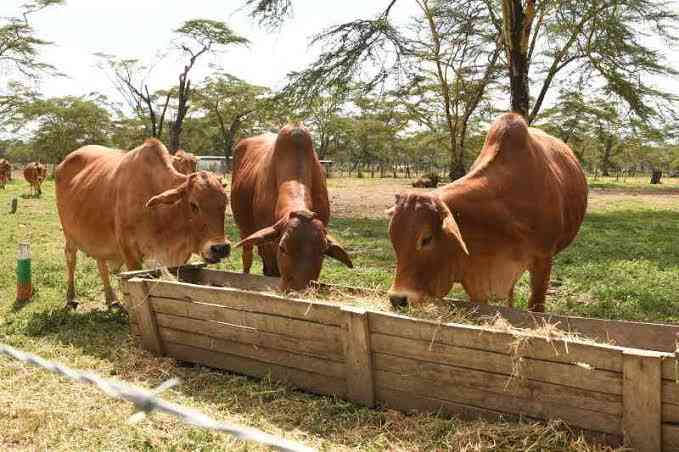
A man has been ordered to pay four cows to his estranged wife as dowry debt after they ended 26 years of marriage.
Senior Principal Kadhi Ali Wako in Garrisa ordered the man, MAM, to alternatively pay the estranged wife (FOO) the cash equivalent to four healthy cows.
“The Respondent (husband) shall pay the Petitioner (wife) her unpaid mahr (dowry) of four cows within 90 days from today, either by delivering four healthy, mature cows in Garissa or by paying the prevailing market value of four such cows in Garissa as at the date of payment,” said Wako.
The Kadhi said the two may obtain a joint valuation from the livestock market office or two reputable livestock traders, and if they disagree, either party may apply for directions from the court.
According to Islamic jurisprudence (Madhhab), unpaid mahr (bridal dower) is considered a binding and enforceable financial debt owed by the husband to his wife, and it remains her exclusive property and does not lapse over time and must eventually be paid or forgiven explicitly by her.
The wife sought divorce for what she said was lack of maintenance and cruelty by her husband, who several times called her a prostitute in front of the children and threatened her with a knife.
The Kadhi allowed the marriage to dissolve after failure to resolve their differences through Alternative Dispute Resolution (ADR) by the village elders and in-laws.
The two had divorced IN 2007 but reconciled and got back together, but after 19 years, FOO finally called it quits.
“The marriage that started in 1999 between the petitioner and respondent ended because of ongoing cruelty, verbal abuse, threats, and failure to provide support after attempts at alternative dispute resolution failed, following both Sharī‘a and Kenyan law,” said Wako.
The Kadhi ordered that MAM continue to provide maintenance for FOO until she settles under the iddah period, provided it does not interfere with his payment of the dowry debt.
Further, the two were ordered to pursue child custody and maintenance in a competent children’s court.
In his defense, MAM said that he paid the mahr “before the Kadhi” upon a 2007 divorce, and thereafter, they reconciled.
However, he did not provide a receipt, record, or call a witness to verify the payment of the dowry.
The Kadhi said MAM declined to call witnesses to corroborated the alleged payment and therefore failed to discharge the burden of proof of payment of the alleged dowry.
FOO accused MAM of only providing for the children and not her personal needs, forcing her to incur debts.
MAM, however, claimed he met family bills. The Kadhi ruled that on a balance of probabilities, non-maintenance of the wife is established for material periods.
Wako said MAM’s failure in providing for the wife (nafaqa), alongside proven cruelty, sustains the dissolution of the marriage.
“Unpaid mahr is a Madhhab point. An unproved assertion of mahr payment ‘before the Kadhi’ during the 2007 episode cannot defeat a clear contractual debt without evidence. The fact of reconciliation does not discharge mahr ipso facto,” said Wako.
Subscribe to our newsletter and stay updated on the latest developments and special offers!